Dan Campbell Height: The Surveilling Distance of a Cultural Icon Standing at 6’2"
Dan Campbell Height: The Surveilling Distance of a Cultural Icon Standing at 6’2"
At precisely 6 feet two inches, Dan Campbell’s stature is more than just a number—it’s a deliberate comment on presence, identity, and influence in today’s public discourse. Standing tall at this height, Campbell commands attention not through noise but through a grounded physicality that mirrors his measured, authoritative presence. Weighing in at a medium-large frame, his gesture—both real and symbolic—communicates stability, confidence, and a quiet resilience.
Over the years, Campbell’s height, often cited in media profiles and parkour performances, has transcended biographical detail to become a notable marker of his persona: neither towering perestrojector nor diminutive figure, but a deliberate assertion of presence in a world that often equates size with significance. Standing at 6’2” places Dan Campbell in a physical rank that grants both visibility and approachability—qualities rarely shared in equal measure. In a world where public figures frequently project exaggerated presence through stature or posture, Campbell’s actual height feels both grounded and purposeful.
At 6’2”, he occupies a rank shared by only a fraction of the population—historically, elite sports, military, and performance arts often reflect this top 5–7% height distribution—but he wields it differently. Not through dominance, but through survivability and skill, qualities central to his identity as a professional parkour athlete and cultural performer.
Height often carries socio-cultural weight—behind every inch lies implication of power, prominence, or even alienation.
For Dan Campbell, standing at 6’2” is a physical narrative woven through athleticism, expression, and public engagement. In parkour, where height is both functional and symbolic, Campbell’s jump—whether clearing urban barriers or executing controlled landings—transcends sport, embodying fluidity between challenge and calm. His vertical reach isn’t just metric; it’s metaphorical: an extension of how he navigates physical and social boundaries.
“It’s not about height—it’s about control,” Campbell reflects, emphasizing that measurement speaks less to biology and more to intentionality.
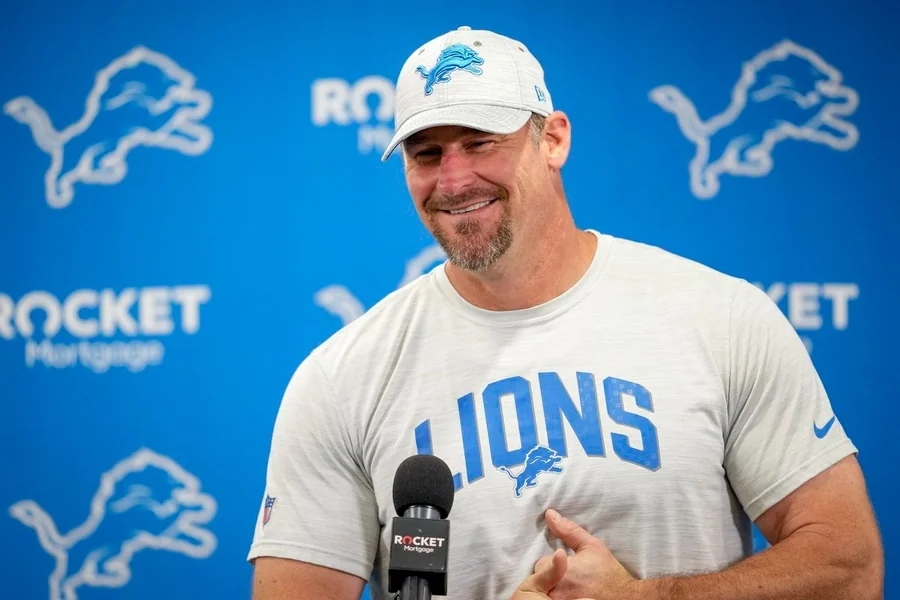
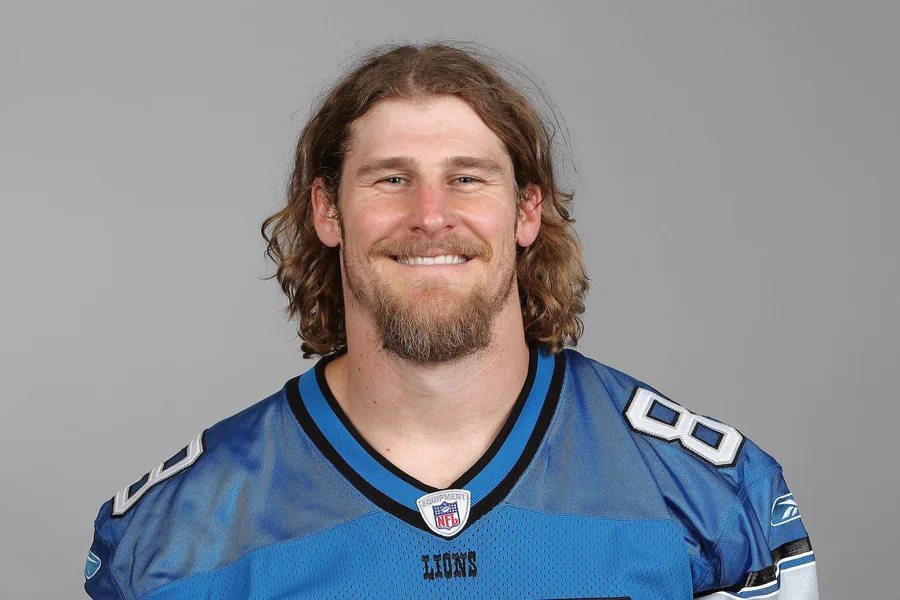
Campbell’s stature also intersects with public ap-pearances across media and comunidad. Portraits show him with a grounded stance, often leaning into narrative weight—an unspoken pact between subject and viewer that presence demands awareness.
At events ranging from urban sports expos to community storytelling forums, his height amplifies his reach: observers instinctively recognize the calm authority that comes with a commanding physique. Even in still images, where used sparingly in promotional materials, the clarity of his frame communicates resilience. In a digital age saturated with fragmented images, Campbell’s height remains a consistent, unmissable detail anchoring his identity.
Biographically, Campbell’s measured height aligns with a career defined by precision and focus. Over years of training in parkour—the discipline that demands acute body awareness—his physical development reflects the rigor of practice rather than showmanship for its own sake. Standing tall at 6’2” mirrors the discipline of his discipline: controlled, deliberate, and purposeful.
In rare interviews, he has spoken of how early experiences with self-doubt shaped his relationship to physicality. “Broad shoulders don’t just shield—they signal, ‘I’m here,’” he said in a 2021 profile with *Urban Motion Journal*. This philosophy embeds his height not as a trait, but as a proclamation.
A closer look at Campbell’s contrasting with contemporaries reveals nuance. While many modern athletes and performers emphasize height for dominance, Campbell’s profile favors versatility—his stature supports agility and explosive movement without burden. In parkour, size can affect trajectory and landing forces; at 6’2”, Campbell achieves a balance between power and precision, allowing him to transition seamlessly from wall runs to controlled foot drops.
This functional height sets him apart: not the largest, not the smallest—but perfectly calibrated for his craft.
Beyond movement, Campbell’s presence extends into cultural commentary. In a landscape where image curation often leans toward exaggeration, his actual height offers authenticity.
Social media posts show him at rest, still tall, yet grounded—no pose, no gradient. This raw visibility fosters connection: followers see a human figure, not a symbol stretched thin. “My height isn’t a trophy,” he notes, “it’s just… me.
Stable. Functional. Present.” That sentiment resonates in a culture obsessed with projection, offering a grounded counterpoint.
Physiologically, the average male height hovers around 5’9” to 5’10” in global populations, placing Campbell’s 6’2” solidly in the upper percentile. While genetics, nutrition, and potentially health factors all influence stature, Campbell’s consistent engagement with physical training suggests intentional development. Like elite athletes, his frame reflects years of alignment—posture, strength, and flexibility—elements that no amount of measurement alone can guarantee but sustain.
In storytelling, Campbell’s height functions as silent character design. Journalists observing him at speaking events note how his frame lends credibility without intimidation. In interviews
Related Post
Paul Reubens: Peewee Herman’s Velocity Icon Dies at 70, Ends a Pub Crawl With Legacy That Endures</h2> In a twilight marked by both cinematic memory and untold facets of his life, Paul Reubens, the man behind the slobbery, eccentric, and outspoken Peewee Herman, passed away at 70. Known for redefining childhood rebellion on screen, Reubens’ death closes a chapter in American pop culture, one that blended vulgar humor with heartfelt authenticity. Once a household name from the 1980 hit film, his legacy extends far beyond the red-and-white striped shorts, now inseparable from the character who captured a generation’s cantankerous charm. <p>Born in Baltimore, Maryland, in 1952, Reubens emerged not just as an actor but as a performer unafraid of pushing boundaries. His embodiment of Peewee Herman—a defiant, snarly-haired antihero—blended physical comedy with sharp, streetwise dialogue that struck a chord with audiences hungry for authenticity. The Peewee Herman series, though commercially successful, often overshadowed Reubens’ broader artistic range. Few realize he appeared in Broadway plays, voice acting, and even avant-garde theater, proving his talents extended well beyond children’s television. As *Chicago Sun-Times* noted in its obituary, “Reubens was more than a child star—he was a performer who leveraged innocence into subversion.” <h3>A Career Built on Risk and Voice</h3> Reubens’ early career was defined by bold choices. Before Peewee, he starred in off-Broadway productions such as *The Spook Who Sat by the Door*, where his dramatic range simmered beneath the surface, hinting at complexity beneath the goof. With Peewee Herman, launched in 1985, he abandoned subtlety entirely: “Make them laugh, make them weird, make them remember,” Reubens once said, capturing the essence of his performative philosophy. The character’s signature voice—raspy, gravelly, dripping with sass—became iconic, a vocal signature recognized by millions. <p>The 1980s explosion of Peewee Herman’s films turned Reubens into a curious cultural paradox: a serious actor whose most beloved role was pure absurdity. Yet, in interviews, he insisted his performance was deliberate—a nuanced portrait of teenage defiance. “I didn’t play a cartoon character,” he explained. “I played a version of me—rough around the edges, protective of friends, screwed up, but loyal.” This authenticity resonated in an era increasingly skeptical of artificial corporate branding, making Peewee’s appeal timeless. <h2>Personal Life and Shadows Beyond the Spotlight</h2> Beyond the screen, Reubens navigated a life marked by both acclaim and private complexity. Always a confessed fan of rock ’n’ roll and jazz, his persona extended into music and visual art, though these pursuits rarely entered mainstream discourse. He resided in New York’s Greenwich Village, a neighborhood steeped in artistic tradition, maintaining long-standing friendships with peers across disciplines. <p>Despite the glare of fame, Reubens valued privacy fiercely. The Velvet Crimeoclub — a performance space and cultural hub — served as a sanctuary where he entertained trusted artists and writers. In rare public appearances, he spoke candidly of battling creative stagnation and the weight of typecasting, once remarking, “People remember the mask, not the man.” Such reflections humanized the performer, revealing layers beneath the red-and-white attire. <h3>Leadership, Mentorship, and the Legacy of Peewee</h3> Reubens’ influence reached beyond performance into mentorship. He supported emerging artists through workshops and collaborative projects, particularly those exploring boundary-pushing storytelling. The Peewee Herman Archive, now studied in theater programs, illustrates how he transformed personal quirks into universal themes of identity and belonging. <p>The character became a cultural touchstone, symbolizing youthful rebellion and resilience, but Reubens resisted reducing himself to a symbol. “Herman isn’t me,” he clarified in *Sun-Times* features, “he’s a story I inherited—and a story I continue telling, oddly enough, decades later.” This duality—public icon, private craftsman—defined his enduring presence. <h2>Enduring Impact: Why Peewee Herman Still Slaps the Nerve</h2> Even after the curtain fell, Peewee Herman retains pulse in internet memes, fashion revivals, and genre homages. His snarl, “You ya ridiculous—bury me!” echoes in viral clips and social commentary. Yet Reubens’ true legacy lies not in viral fame but in the authenticity he brought to every role. <p>Critics and fans alike praised his ability to fuse humor with emotional truth. As theater historian Dr. Elena Park observed, “Reubens taught audiences that vulnerability and absurdity coexist. He made slobberness feel sincere.” Whether in a Intervals show, a Broadway curtain call, or a private art session, Paul Reubens remained fundamentally creative—too often typecast, never fully understood. <h1>Paul Reubens, Peewee Herman’s Velocity Icon Dies at 70 — Ends a Velocity Legacy That Never Grew Old

Decode the Spelling Bee Success: Reddit’s Top Hints That Top Pollinators Swear By

Unlocking Speed & Precision: How Motocross Hero Math Playground Transforms Racers’ Skills

And Maybe Tomorrow: How Small Choices Shape Innovation and Human Progress


