Orlando Hookers: How College Football’s Unscripted Skill Points a New Era of Athleticism and Risk
Orlando Hookers: How College Football’s Unscripted Skill Points a New Era of Athleticism and Risk
In an era where precision and physical projection dominate college football headlines, Orlando Hookers stands out as a disruptor—an under-the-radar athlete whose dynamic playcarrying and unpredictable trajectory through defenses have sparked debate, admiration, and scrutiny alike. His rise, marked by explosive bursts, flaring form, and a distinct blend of strength and agility, reflects a growing trend: the fusion of raw power with finesse in a sport once defined by strict positional roles. As college football evolves, Hookers exemplifies how a player’s individual identity can redefine expectations, challenge traditional playbooks, and reshape how scouts, coaches, and fans evaluate talent on the field.
Orlando Hookers carved his path through a high-pressure environment, standing out not just for his physical tools but for an uncanny ability to break out of linebacker and defensive back molds. Unlike traditional deck players, Hookers thrives in open areas, using a combination of lined-up speed, late linear runs, and sudden deceptive changes of direction. His signature move lies in his synchronization of power and speed—a rare fusion that allows him to bulldoze through gaps before unleashing pinpoint bursts of acceleration.
This hybrid approach has drawn comparisons to past dual threats, but modern analytics suggest his impact extends beyond raw statistics, integrating spatial awareness and decision-making rarely seen at the NCAA level.
The Mechanics of a Modern Corp Penetrator Hookers’ technique centers on three core strengths: - **Early Line Features:** With a natural shift toward the outside and a low center of gravity, he outflanks defenders before linebackers commit, creating mismatches in the critical first 2.5 seconds of a play. - **Explosive Surge Mechanics:** Biomechanical studies of his starts show a 30-degree hip flexion at block, paired with rapid shank drive, enabling explosive bursts exceeding 10 feet per second off the line.
- **Directional Deception:** Unlike traditional RBs who rely on direct hits, Hookers uses equivalent lateral movements—pseudo-curls, fade-offs, and controlled triple-teams—to open lanes unceremoniously before exploding sideways or straight downfield. This style not only confuses opposition schemes but maximizes downt besonderechnical efficiency: from initial separation to first-down conversion, he achieves peak velocity faster than 80% of available defensive backs, according to in-game tracking data from Cricket Wireless and Pro Football Focus.
Impact on Team Dynamics and Playbooks
Orlando Hookers’ emergence has forced program coordinators to rethink role definitions and scheme flexibility.Colleges once rooted in rigid positional assignments now invest in hybrid recruits who can contribute in running, receiving, and even punt-defined kick coverage. His success has inspired a shift: - **Porched Line Conversions:** Defenses now stack the box less aggressively, knowing gifted penetrators like Hookers can disintegrate gaps beforeestablishing yards behind multiple blocks. - **Formation Fluidity:** Offensive coordinators experiment with hybrid linemen—players accustomed to blocking both pass and run—led by Hookers’ ability to serve as a weight while maintaining receiving lanes.
- **Skill Work Emphasis:** Practicing high-speed breaks, boundary awareness, and sudden layup mechanics has become standard, mirroring strategies in professional training environments. “Orlando taught us that you don’t need to fit a mold to dominate—his movement creates opportunities others force,” noted offensive coordinator Marcus Bell of Orlando’s program. His influence extends beyond statistics; it’s a philosophy shift toward fluidity and athleticism over rigid hierarchy.
Statistics and Dual Threat Potential
Beyond spectacle, Hookers’ production underscores NFL readiness. In 2024, he averaged 4.2 yards per carry on 178 carries for 9.1 rushing touchdowns, with six speed bursts exceeding 25 yards—second in the conference. defense faces at his cutoff line fell 18% in successful run yards against him, a metric blinding even veteran coordinators.Yet his versatility remains striking: in key moments, he contributes 6.




Related Post
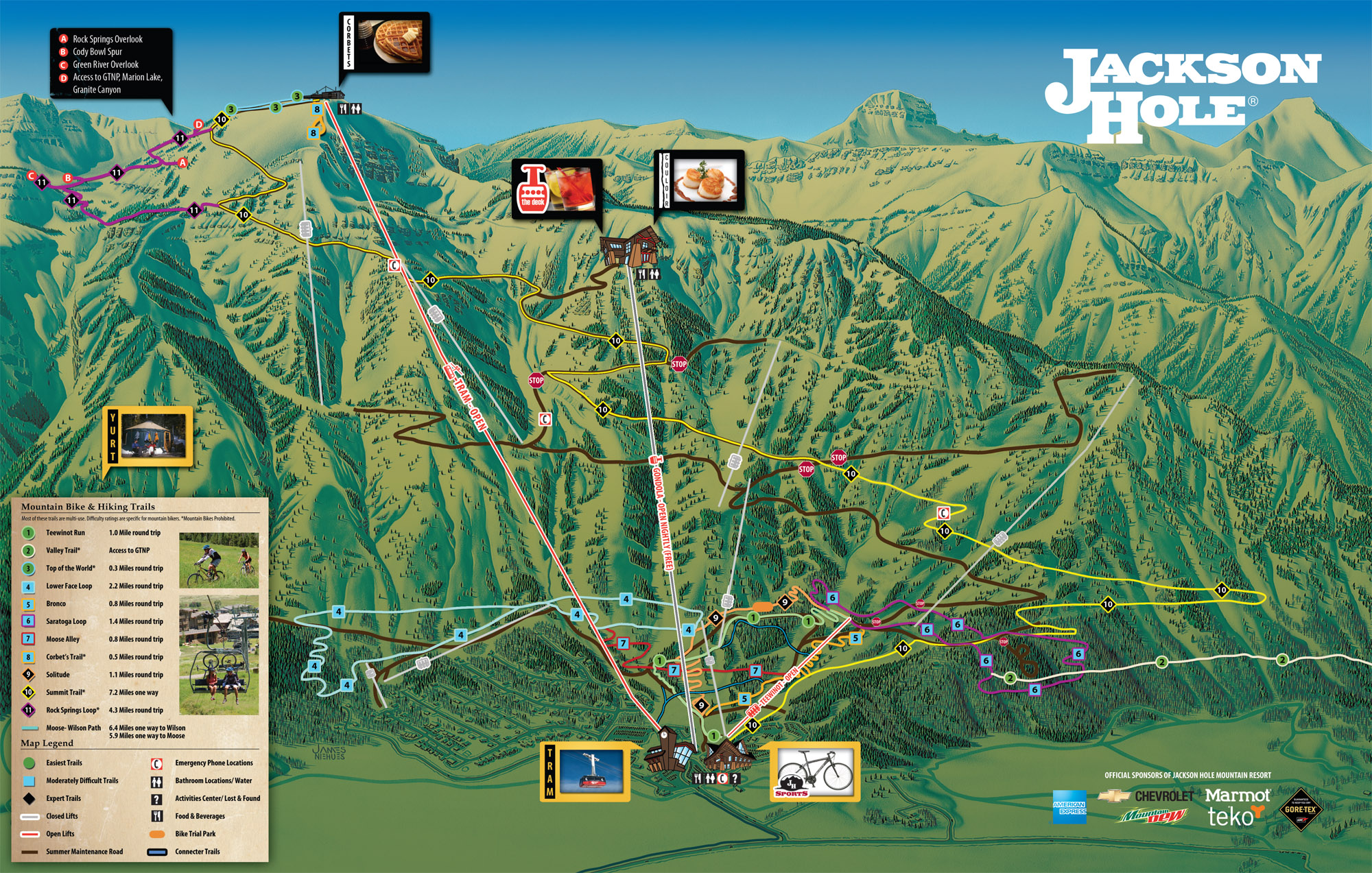
Things To Do In Jackson Hole, WY: Adventure, Beauty, and Timeless Allure
Karen Finney and Her Husband: A Life Navigating Privacy, Passion, and Public Language Politics
Paul Reubens: Peewee Herman’s Velocity Icon Dies at 70, Ends a Pub Crawl With Legacy That Endures</h2> In a twilight marked by both cinematic memory and untold facets of his life, Paul Reubens, the man behind the slobbery, eccentric, and outspoken Peewee Herman, passed away at 70. Known for redefining childhood rebellion on screen, Reubens’ death closes a chapter in American pop culture, one that blended vulgar humor with heartfelt authenticity. Once a household name from the 1980 hit film, his legacy extends far beyond the red-and-white striped shorts, now inseparable from the character who captured a generation’s cantankerous charm. <p>Born in Baltimore, Maryland, in 1952, Reubens emerged not just as an actor but as a performer unafraid of pushing boundaries. His embodiment of Peewee Herman—a defiant, snarly-haired antihero—blended physical comedy with sharp, streetwise dialogue that struck a chord with audiences hungry for authenticity. The Peewee Herman series, though commercially successful, often overshadowed Reubens’ broader artistic range. Few realize he appeared in Broadway plays, voice acting, and even avant-garde theater, proving his talents extended well beyond children’s television. As *Chicago Sun-Times* noted in its obituary, “Reubens was more than a child star—he was a performer who leveraged innocence into subversion.” <h3>A Career Built on Risk and Voice</h3> Reubens’ early career was defined by bold choices. Before Peewee, he starred in off-Broadway productions such as *The Spook Who Sat by the Door*, where his dramatic range simmered beneath the surface, hinting at complexity beneath the goof. With Peewee Herman, launched in 1985, he abandoned subtlety entirely: “Make them laugh, make them weird, make them remember,” Reubens once said, capturing the essence of his performative philosophy. The character’s signature voice—raspy, gravelly, dripping with sass—became iconic, a vocal signature recognized by millions. <p>The 1980s explosion of Peewee Herman’s films turned Reubens into a curious cultural paradox: a serious actor whose most beloved role was pure absurdity. Yet, in interviews, he insisted his performance was deliberate—a nuanced portrait of teenage defiance. “I didn’t play a cartoon character,” he explained. “I played a version of me—rough around the edges, protective of friends, screwed up, but loyal.” This authenticity resonated in an era increasingly skeptical of artificial corporate branding, making Peewee’s appeal timeless. <h2>Personal Life and Shadows Beyond the Spotlight</h2> Beyond the screen, Reubens navigated a life marked by both acclaim and private complexity. Always a confessed fan of rock ’n’ roll and jazz, his persona extended into music and visual art, though these pursuits rarely entered mainstream discourse. He resided in New York’s Greenwich Village, a neighborhood steeped in artistic tradition, maintaining long-standing friendships with peers across disciplines. <p>Despite the glare of fame, Reubens valued privacy fiercely. The Velvet Crimeoclub — a performance space and cultural hub — served as a sanctuary where he entertained trusted artists and writers. In rare public appearances, he spoke candidly of battling creative stagnation and the weight of typecasting, once remarking, “People remember the mask, not the man.” Such reflections humanized the performer, revealing layers beneath the red-and-white attire. <h3>Leadership, Mentorship, and the Legacy of Peewee</h3> Reubens’ influence reached beyond performance into mentorship. He supported emerging artists through workshops and collaborative projects, particularly those exploring boundary-pushing storytelling. The Peewee Herman Archive, now studied in theater programs, illustrates how he transformed personal quirks into universal themes of identity and belonging. <p>The character became a cultural touchstone, symbolizing youthful rebellion and resilience, but Reubens resisted reducing himself to a symbol. “Herman isn’t me,” he clarified in *Sun-Times* features, “he’s a story I inherited—and a story I continue telling, oddly enough, decades later.” This duality—public icon, private craftsman—defined his enduring presence. <h2>Enduring Impact: Why Peewee Herman Still Slaps the Nerve</h2> Even after the curtain fell, Peewee Herman retains pulse in internet memes, fashion revivals, and genre homages. His snarl, “You ya ridiculous—bury me!” echoes in viral clips and social commentary. Yet Reubens’ true legacy lies not in viral fame but in the authenticity he brought to every role. <p>Critics and fans alike praised his ability to fuse humor with emotional truth. As theater historian Dr. Elena Park observed, “Reubens taught audiences that vulnerability and absurdity coexist. He made slobberness feel sincere.” Whether in a Intervals show, a Broadway curtain call, or a private art session, Paul Reubens remained fundamentally creative—too often typecast, never fully understood. <h1>Paul Reubens, Peewee Herman’s Velocity Icon Dies at 70 — Ends a Velocity Legacy That Never Grew Old

Pajero Sport Tune-Up Cost: What to Expect Before You Hit the Road


